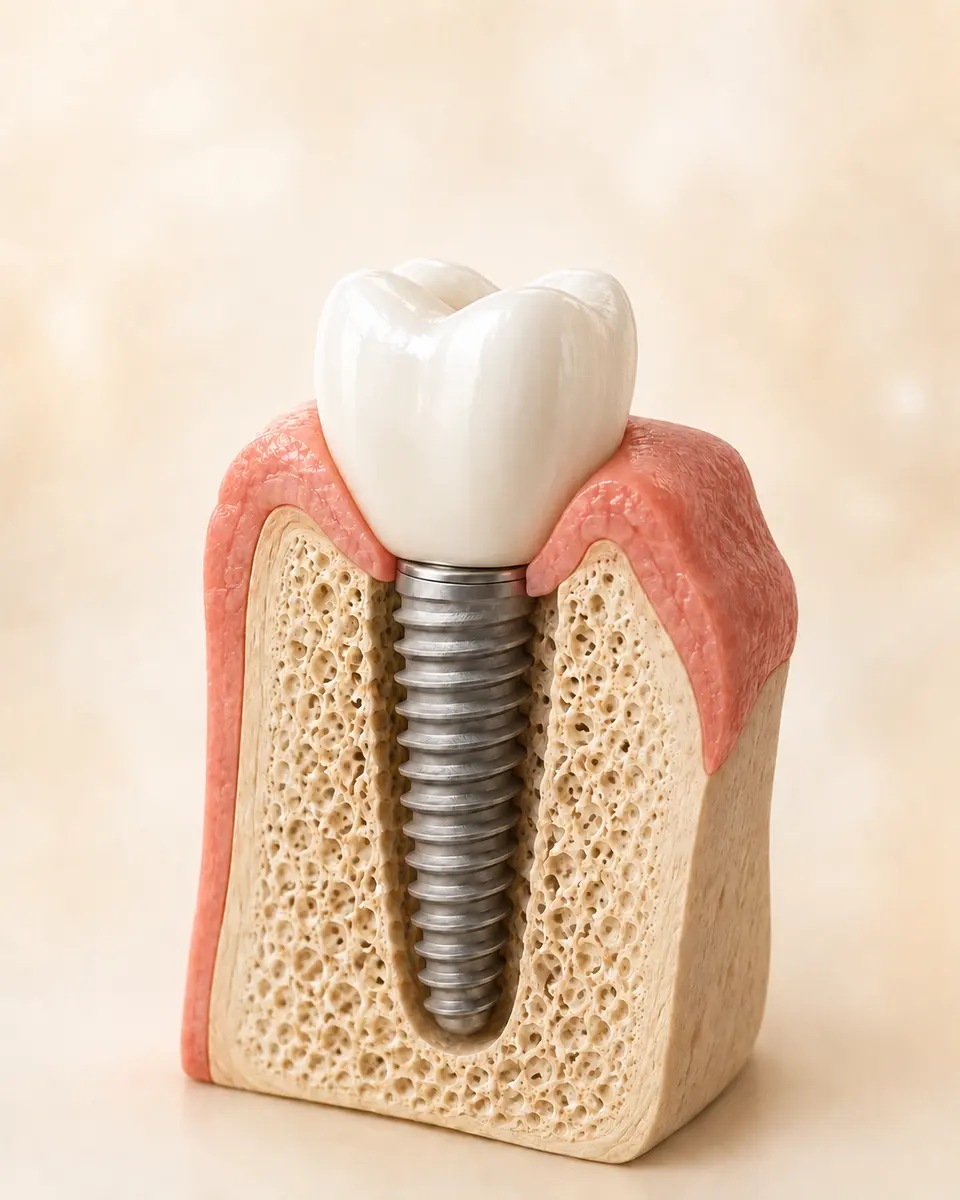
Single-tooth implants
A fixed, natural-looking replacement planned to sit comfortably alongside your existing teeth.
Implant, restorative & general dentist in Norfolk
Considered implant treatment, explained clearly and planned around you — from replacing one tooth to restoring a complete smile.
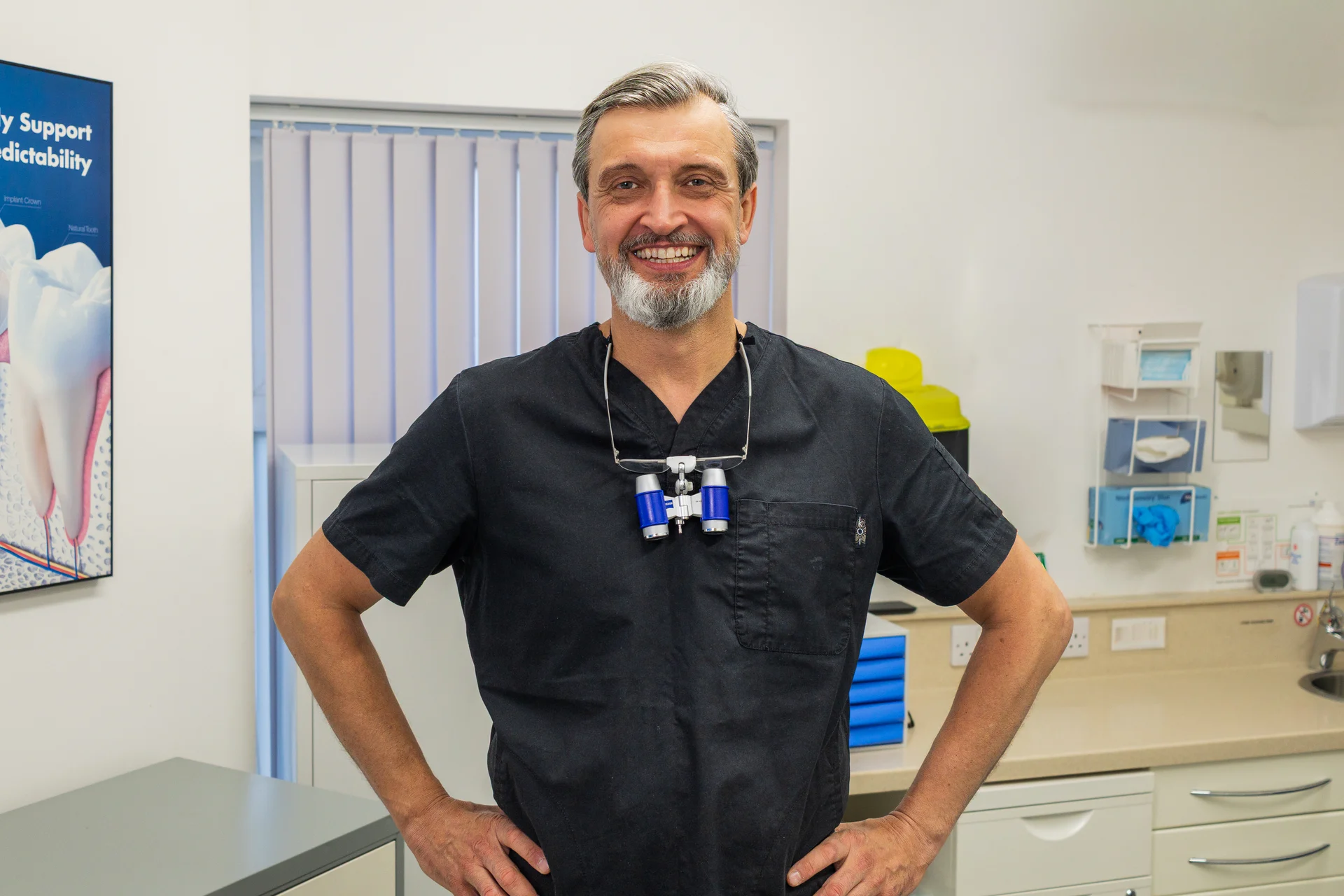
Personal care
One clinician, from planning to restoration
Care built on
Clear explanations•Careful planning•Natural results•Long-term supportUnderstanding implants
A dental implant is a small titanium post placed in the jawbone to replace the root of a missing tooth. Once healed, it supports a custom-made crown designed to look and function like a natural tooth.
For many patients, an implant-supported tooth is the closest fixed replacement to a natural tooth in both appearance and function. Unlike a removable denture, it stays firmly in place. Unlike a conventional bridge, it can replace a tooth without relying on or filing down healthy neighbouring teeth.
This can make eating, speaking and smiling feel more natural and secure.
Implant solutions
Every treatment plan begins with what you want to change, what is clinically achievable and which option offers the best long-term value for you.
A fixed, natural-looking replacement planned to sit comfortably alongside your existing teeth.
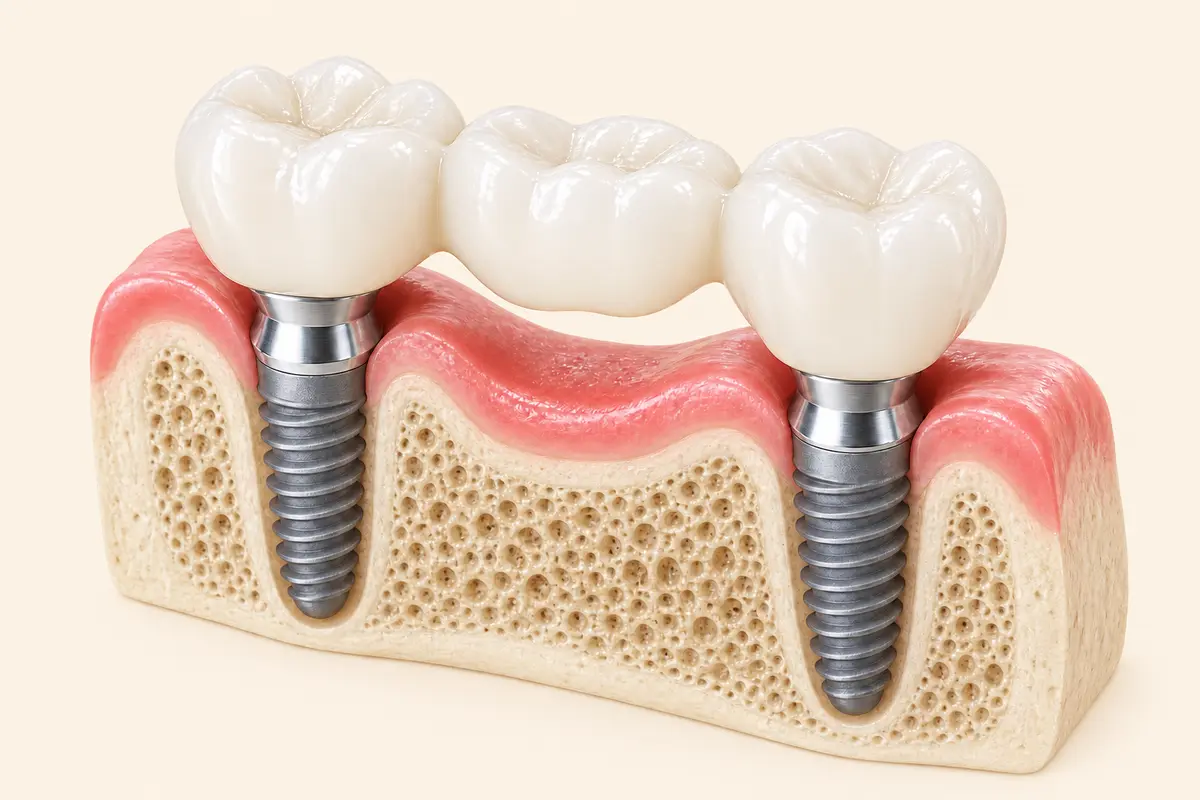
A fixed solution for replacing several missing teeth, supported by implants without unnecessary treatment of healthy neighbouring teeth.
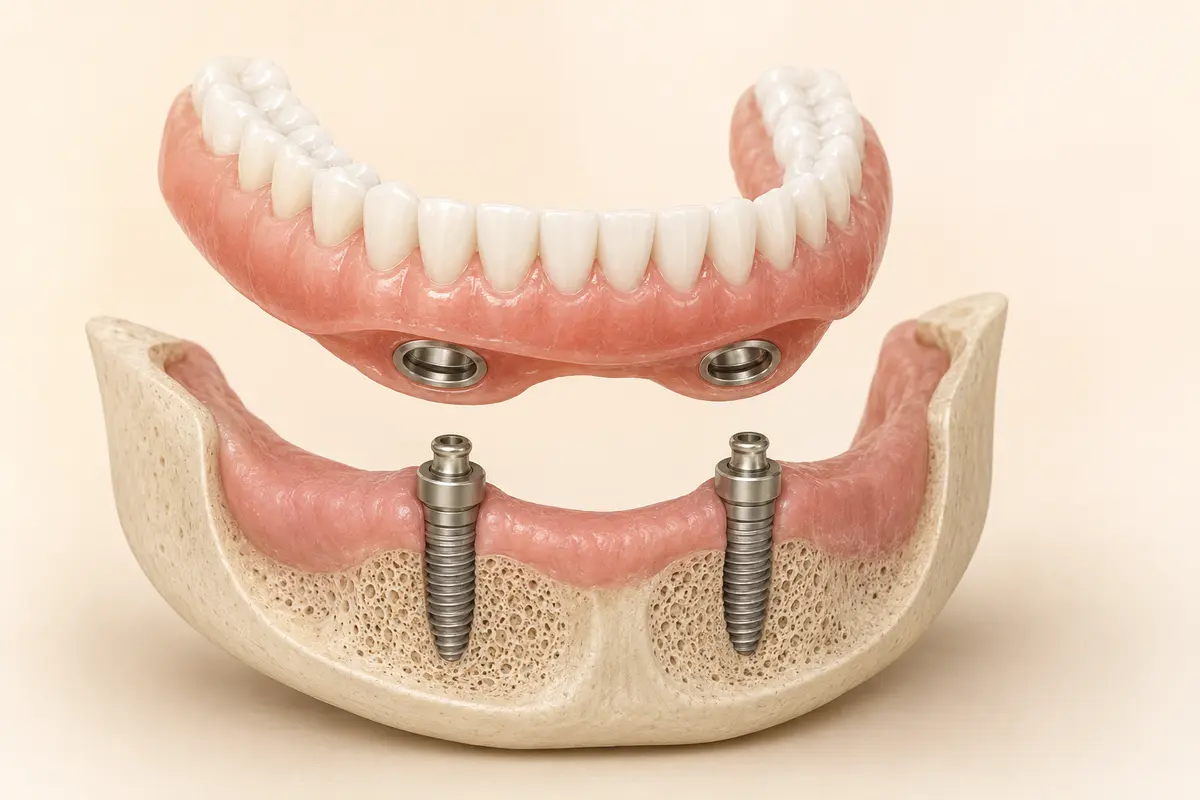
A more stable solution for patients who want greater confidence when speaking, smiling and eating.
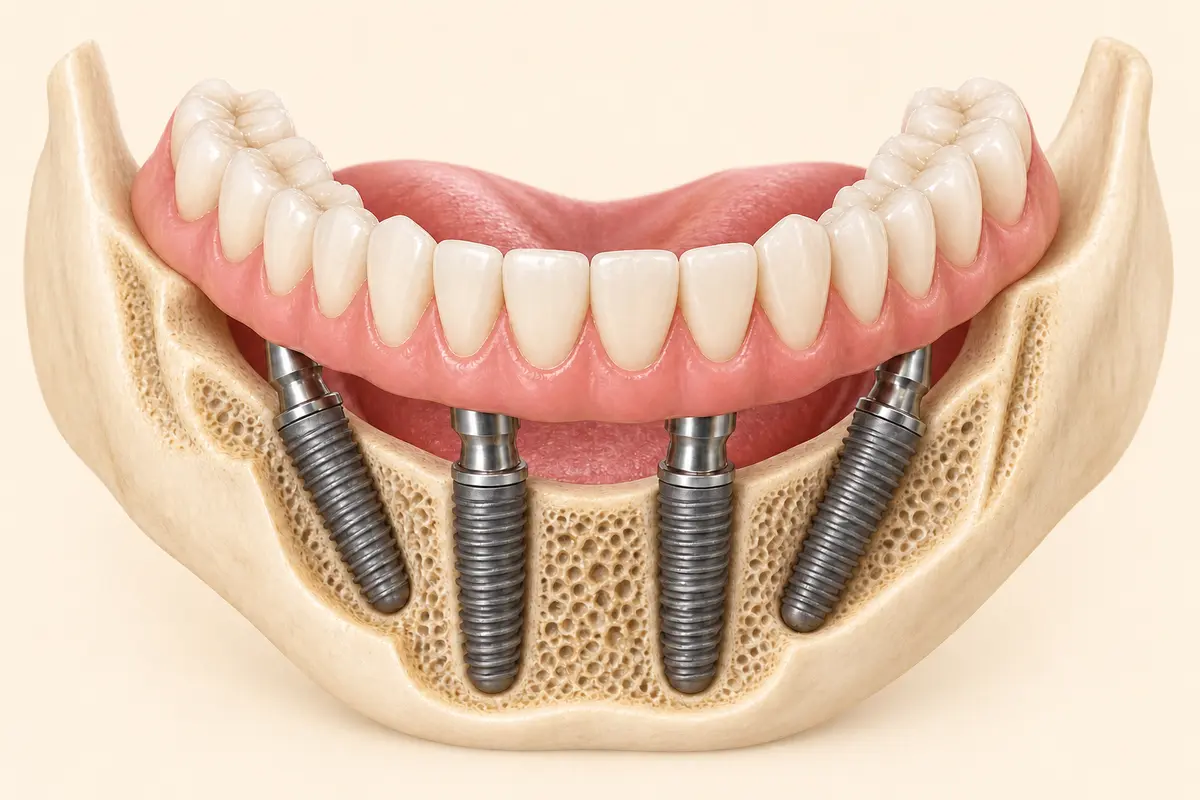
A full-arch fixed bridge supported by carefully positioned implants for patients who need to replace all teeth in the upper or lower jaw.
View clinical resultsSelected clinical results
From individual implant crowns to fixed bridges and full-arch treatment, every restoration is designed for the person wearing it.
These selected cases show different implant solutions. Each treatment plan reflects the patient’s individual anatomy, oral health, bite and aesthetic requirements.
Individual crowns · Tooth- and implant-supported
One incisor required extraction and replacement with an implant-supported crown. The neighbouring tooth was retained and restored with a new tooth-supported crown. The two individual crowns were designed to sit naturally together within the smile.
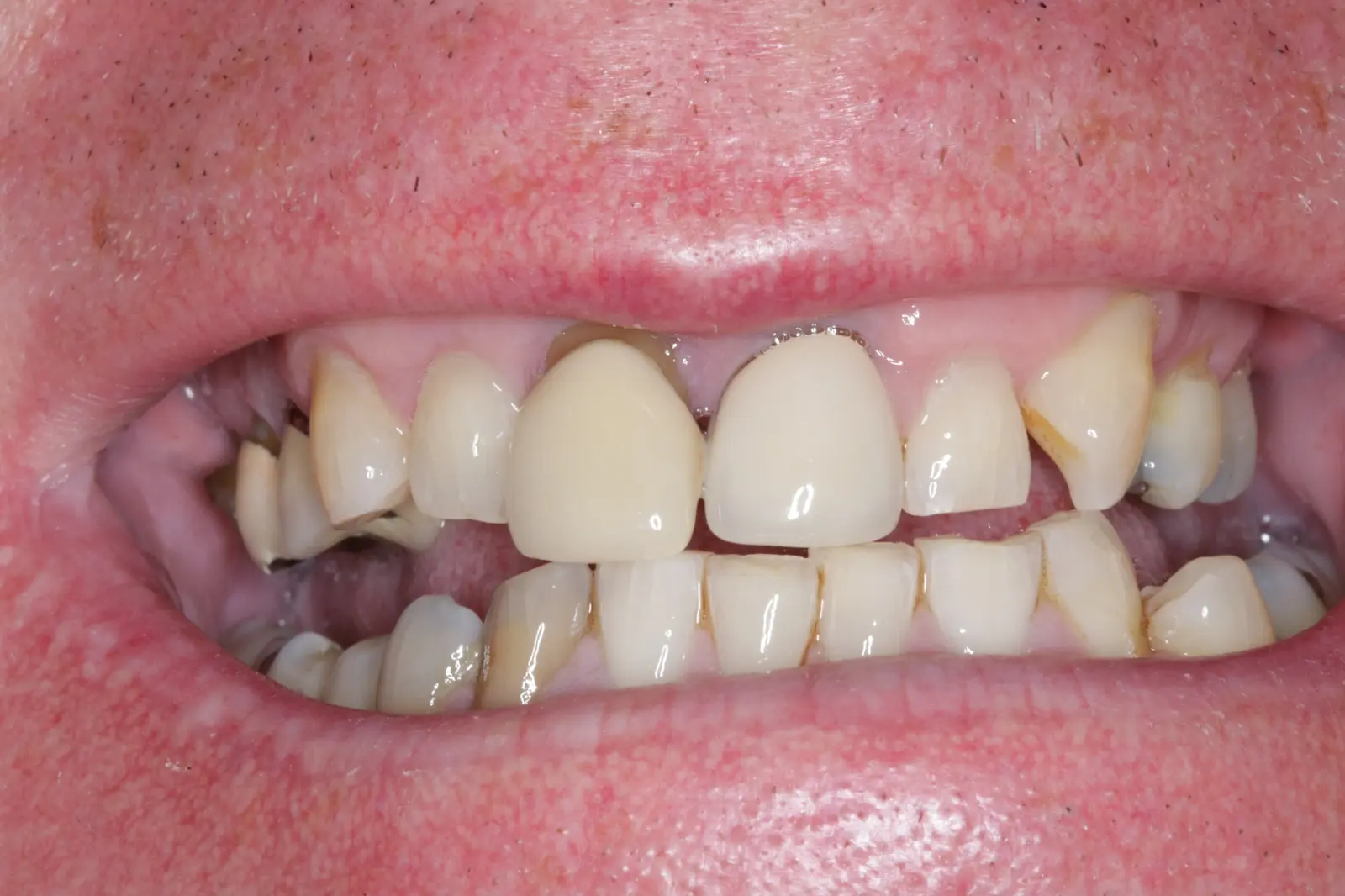 Before treatment
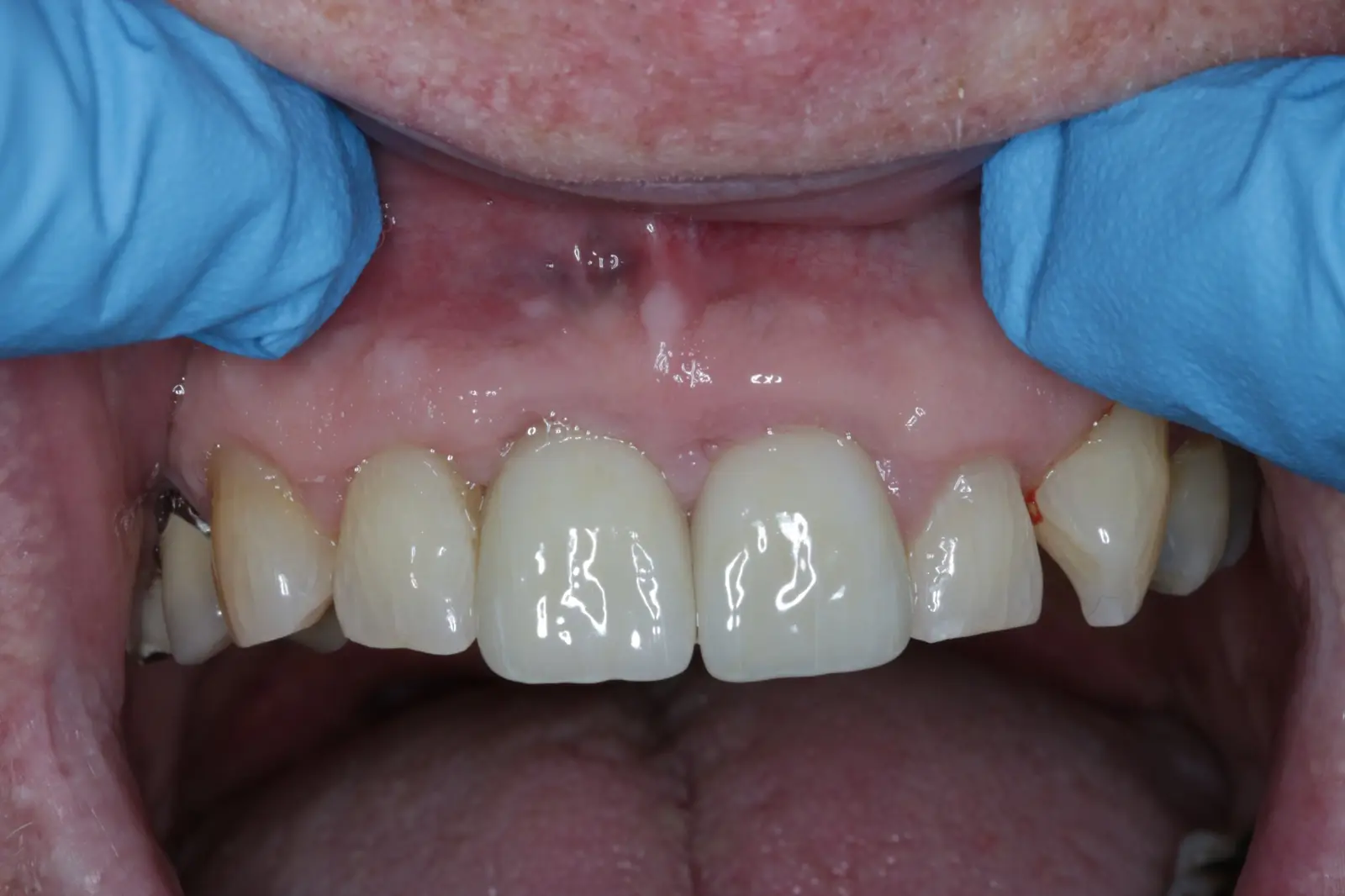 After treatment
Single-tooth implant · Lower incisor
A single implant can support one custom-made crown without preparing the neighbouring teeth. Here, the healing stage is followed by the completed lower incisor restoration.
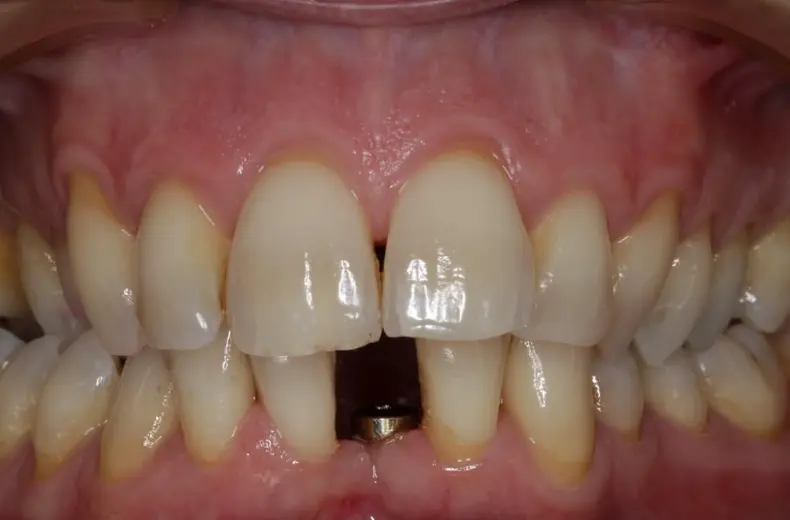 Before restoration
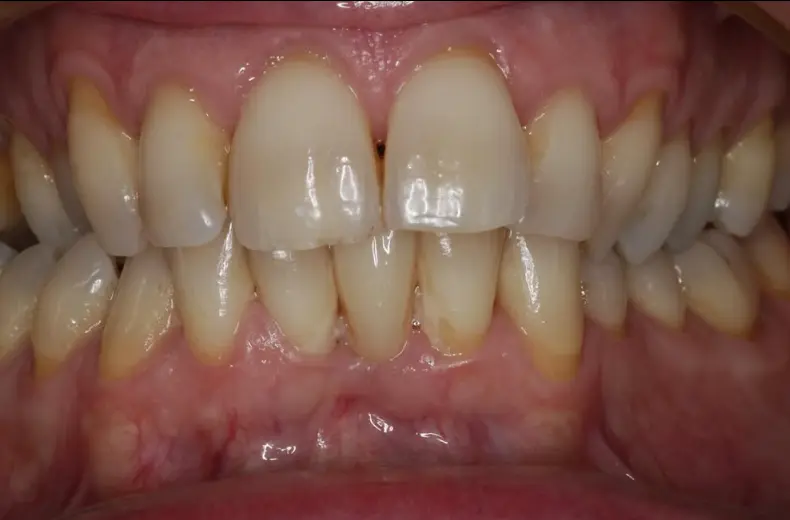 After restoration
Implant-supported bridge
A bridge can be supported by implants rather than by preparing neighbouring natural teeth. The number and position of implants depend on the clinical circumstances.
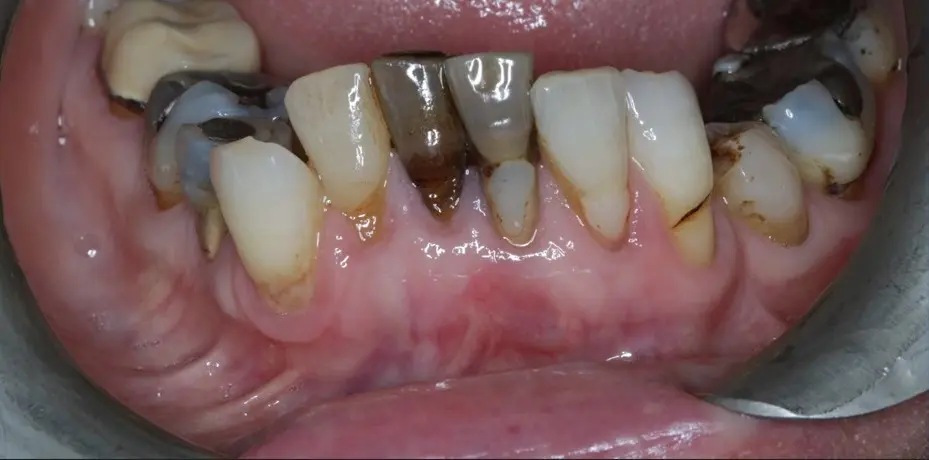 Before treatment
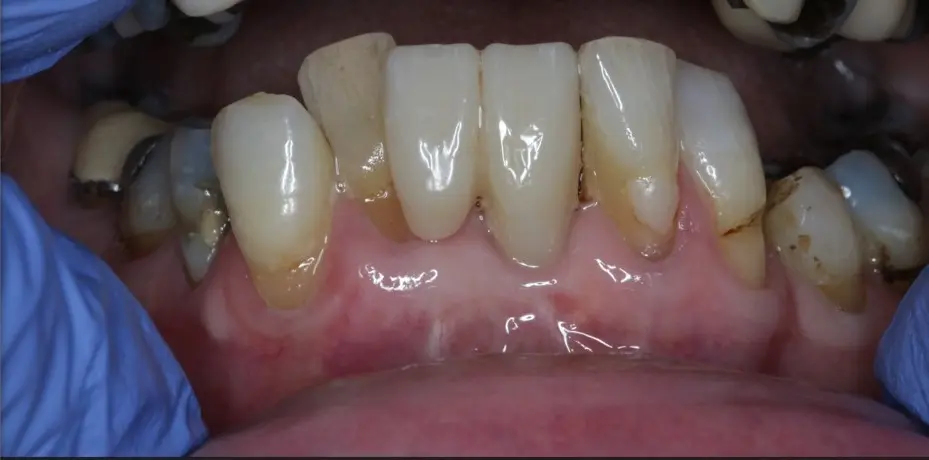 After treatment
Upper-arch All-on-X · Case 01
For selected patients with a failing dentition, an All-on-X approach can replace a complete arch of teeth with a fixed implant-supported bridge.
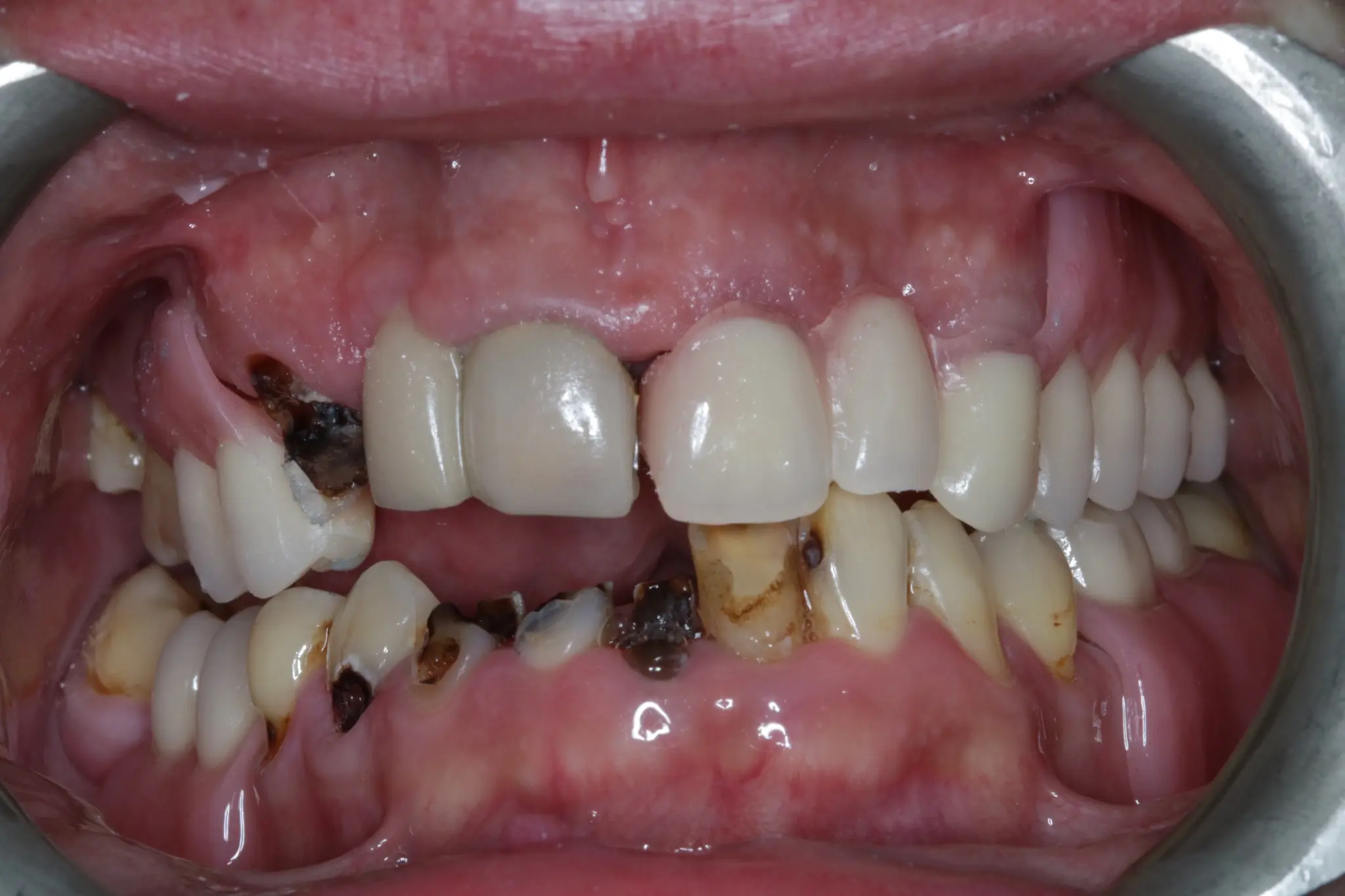 Before treatment
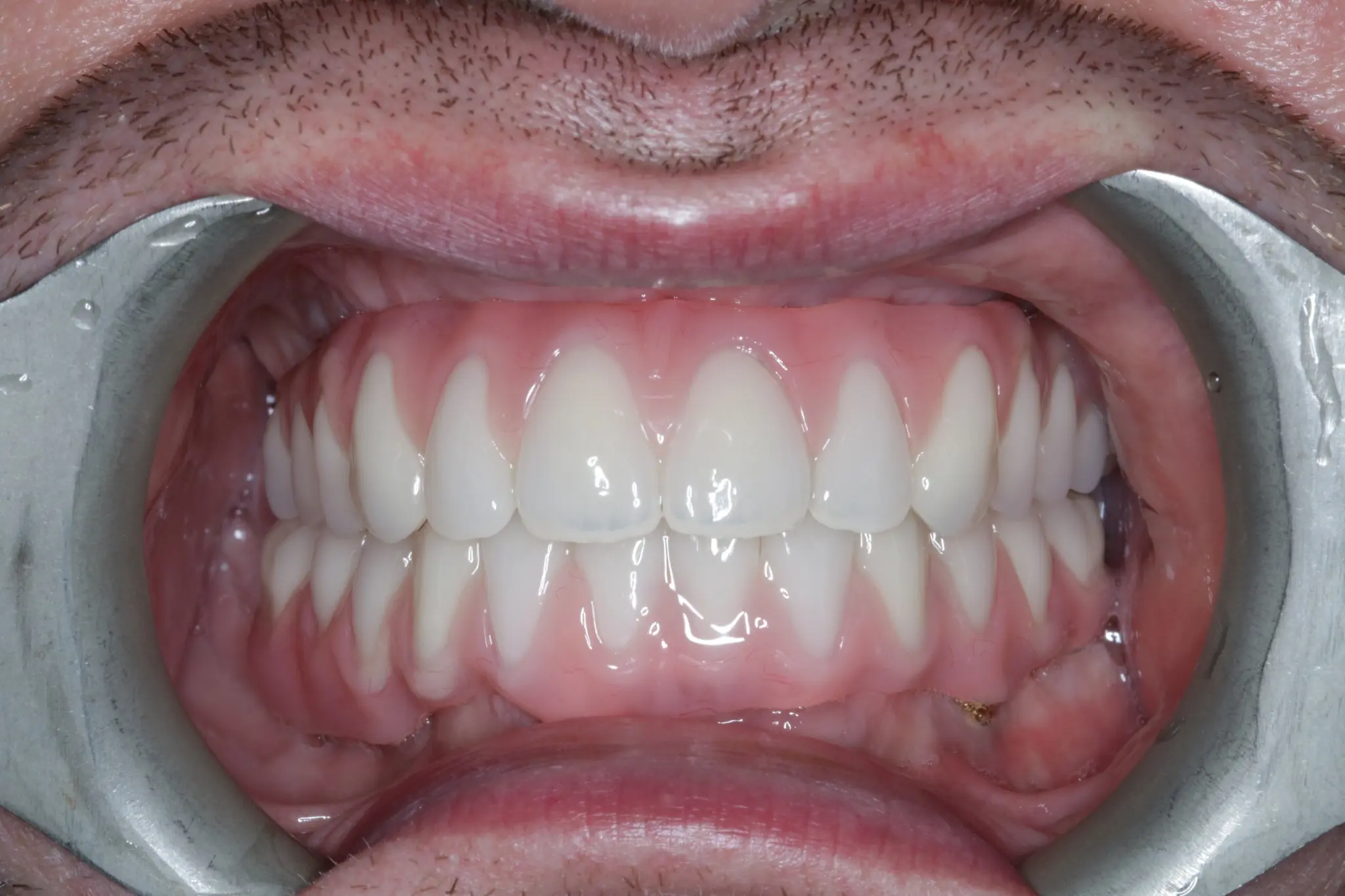 After treatment
Upper-arch All-on-X · Case 02
The position of the implants and the design of the final bridge are planned together to support a stable bite, comfortable function and a natural-looking smile.
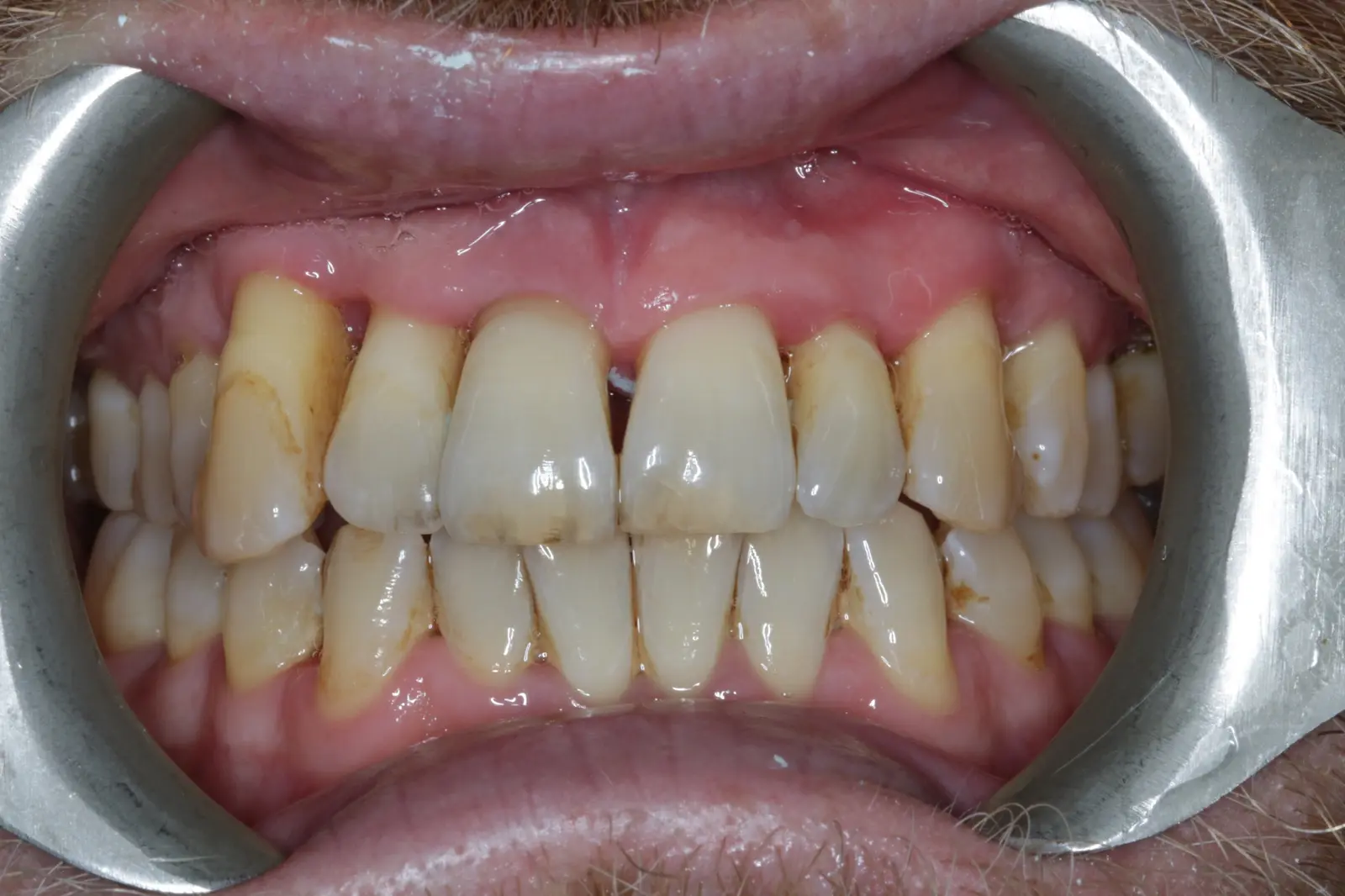 Before treatment
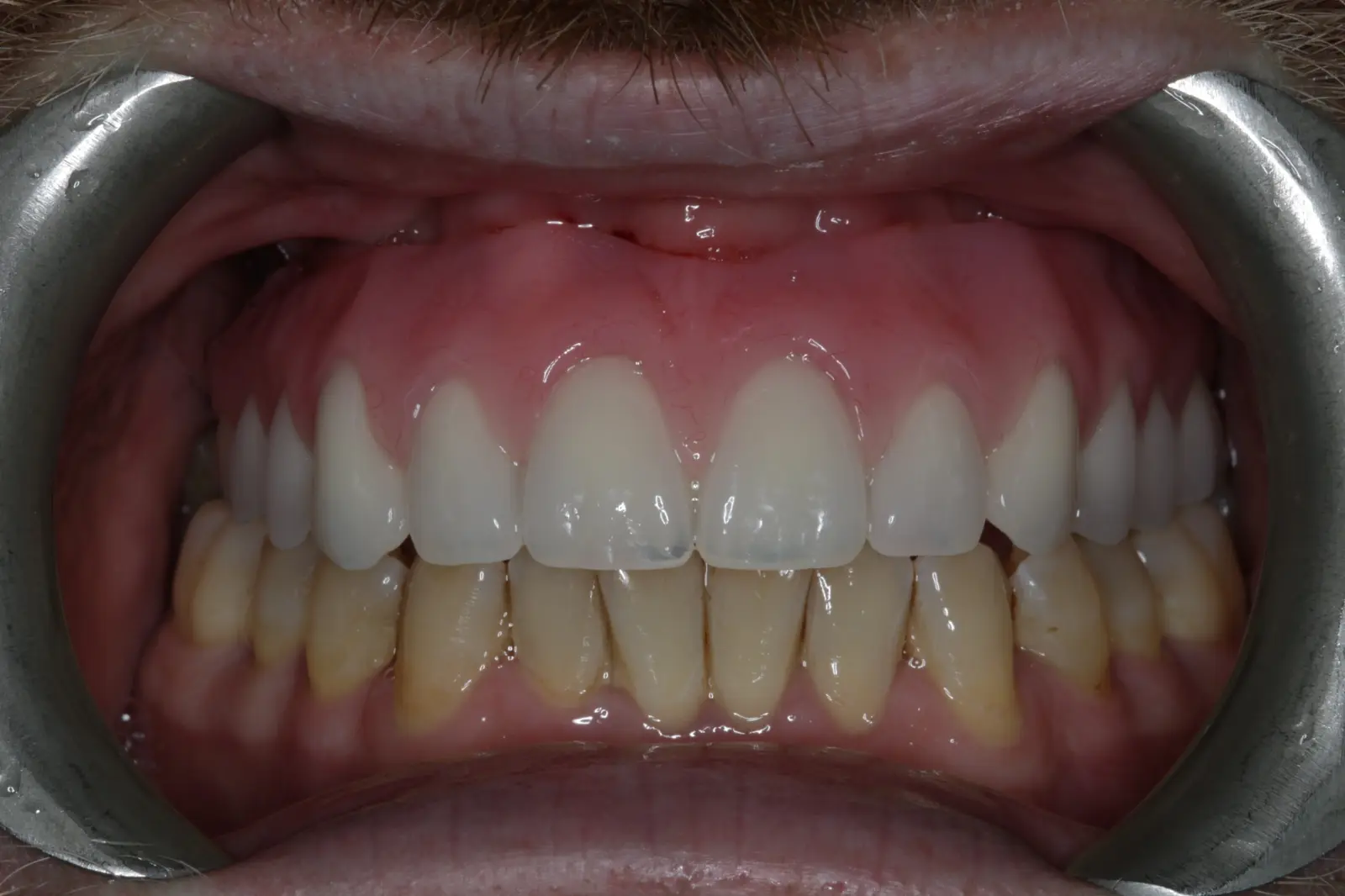 After treatment
Before & after
Clinical photographs showing the upper front teeth before and after treatment.
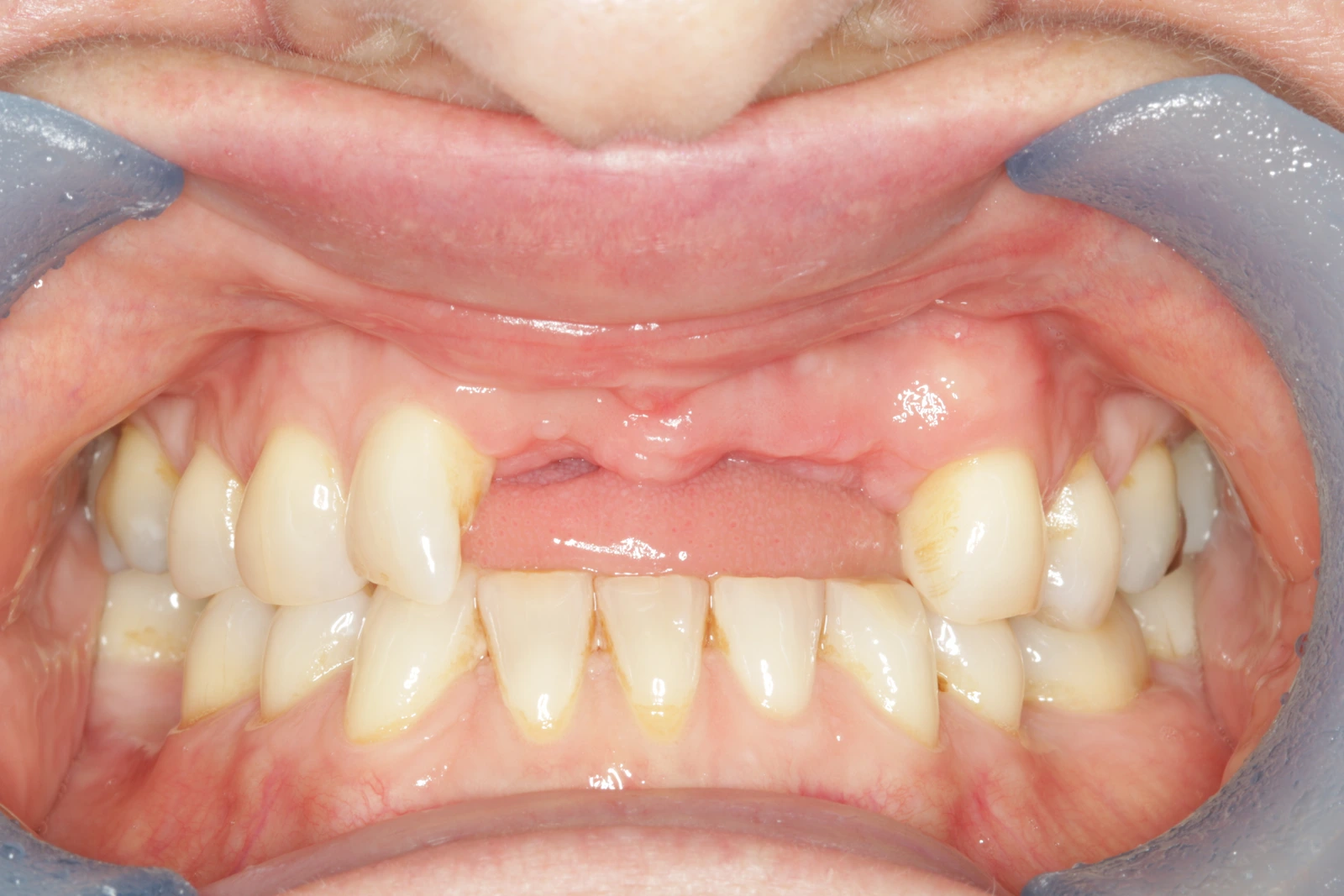 Before treatment
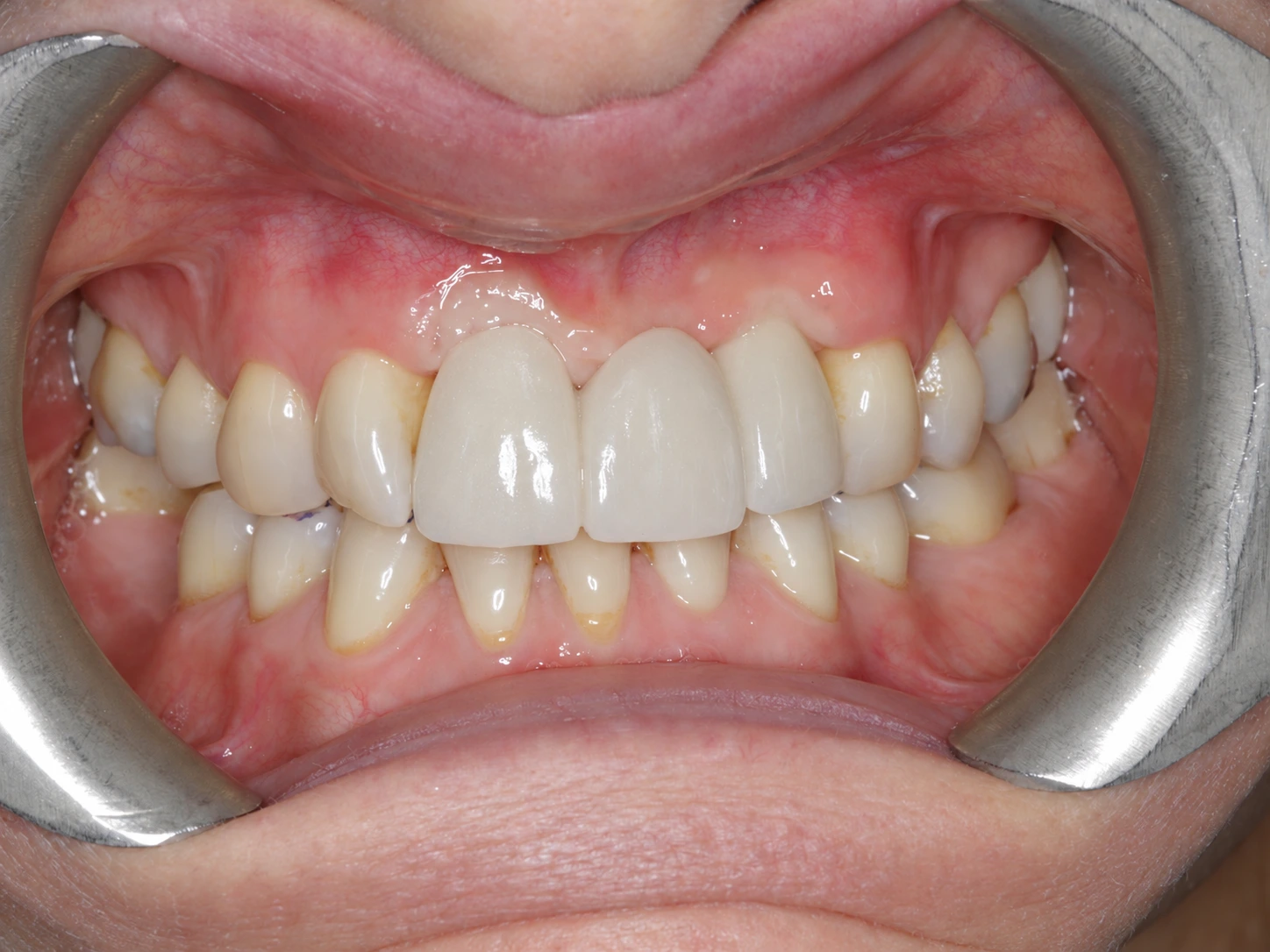 After treatment
Before & after
Clinical photographs showing the upper front teeth before and after treatment.
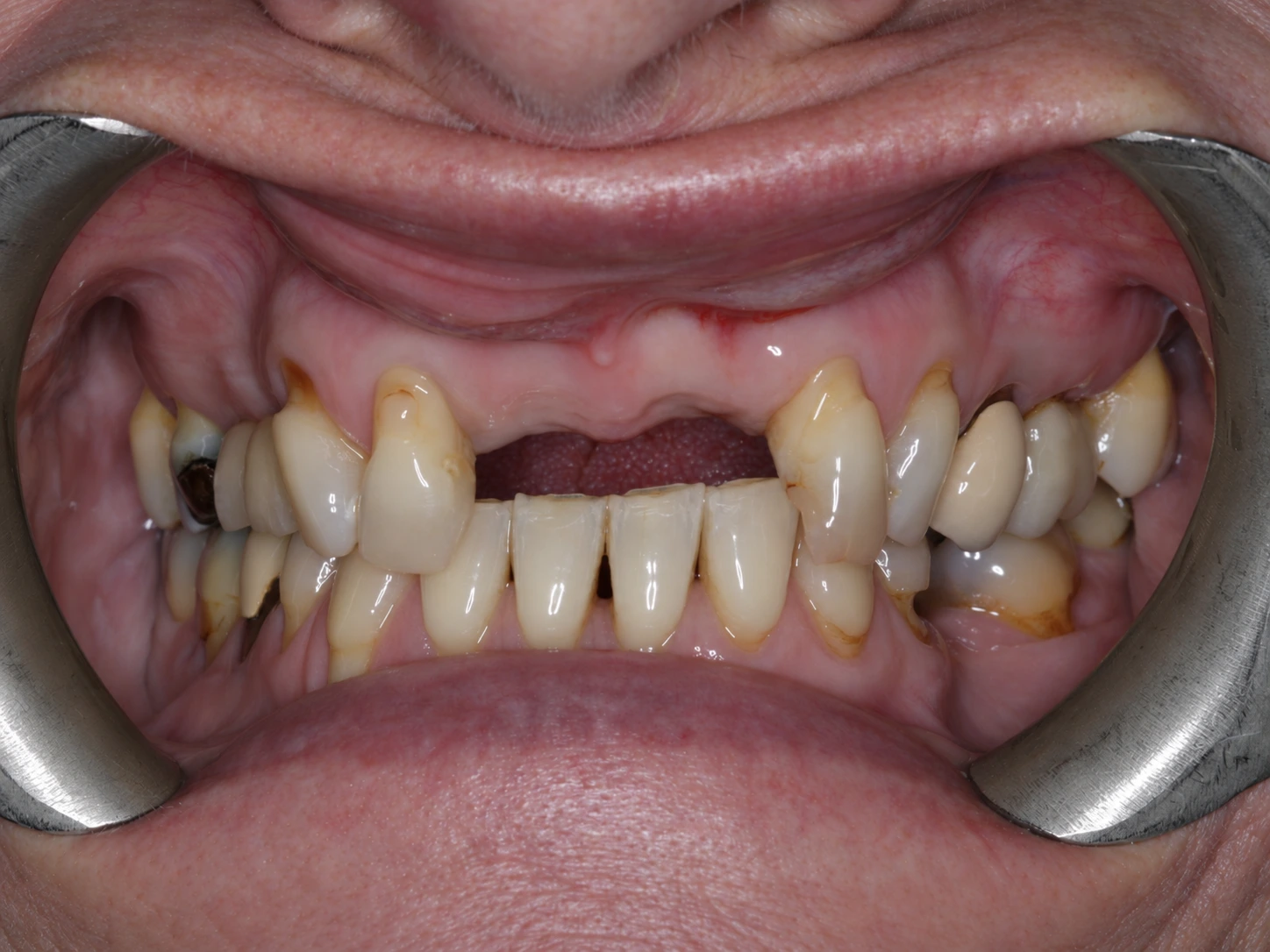 Before treatment
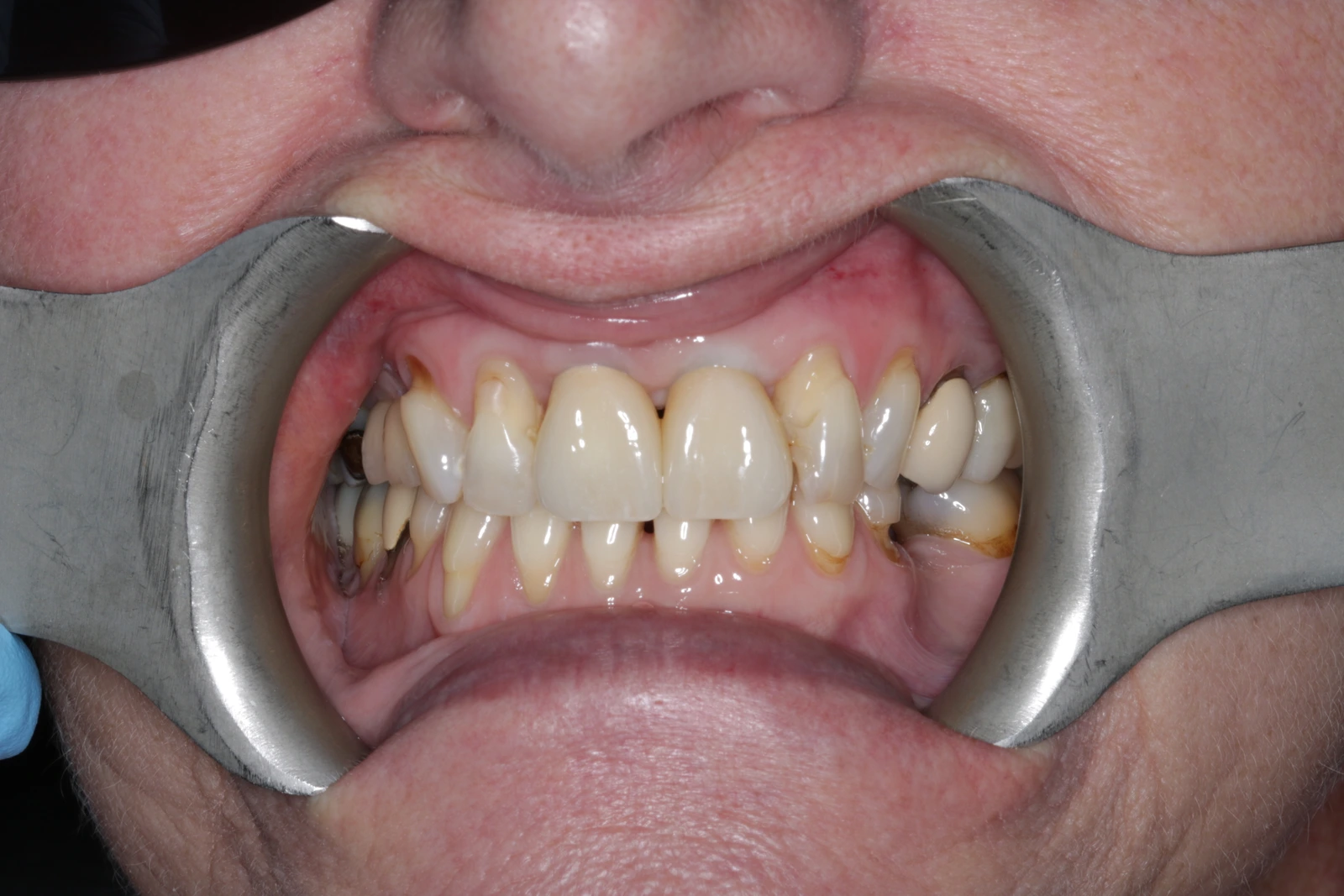 After treatment
Collaborative care
Dr Stavros Eleftheriou has extensive international experience in implantology and oral and maxillofacial surgery, with advanced training focused on the oral and facial structures.
Selected complex cases — particularly All-on-X and full-arch treatment — are planned collaboratively. This combines Dr Eleftheriou’s advanced surgical experience with Dr Ciszewski’s restorative planning and delivery of the final reconstruction, so the implants and the final teeth are considered together from the outset.
Fully guided implant placement
A surgical guide is a custom-made, 3D-printed or milled template that fits over your teeth or gums to control the precise angle, depth and position of the surgical drill during implant placement. Approximately 95% of my implant cases are carried out using guided surgery.
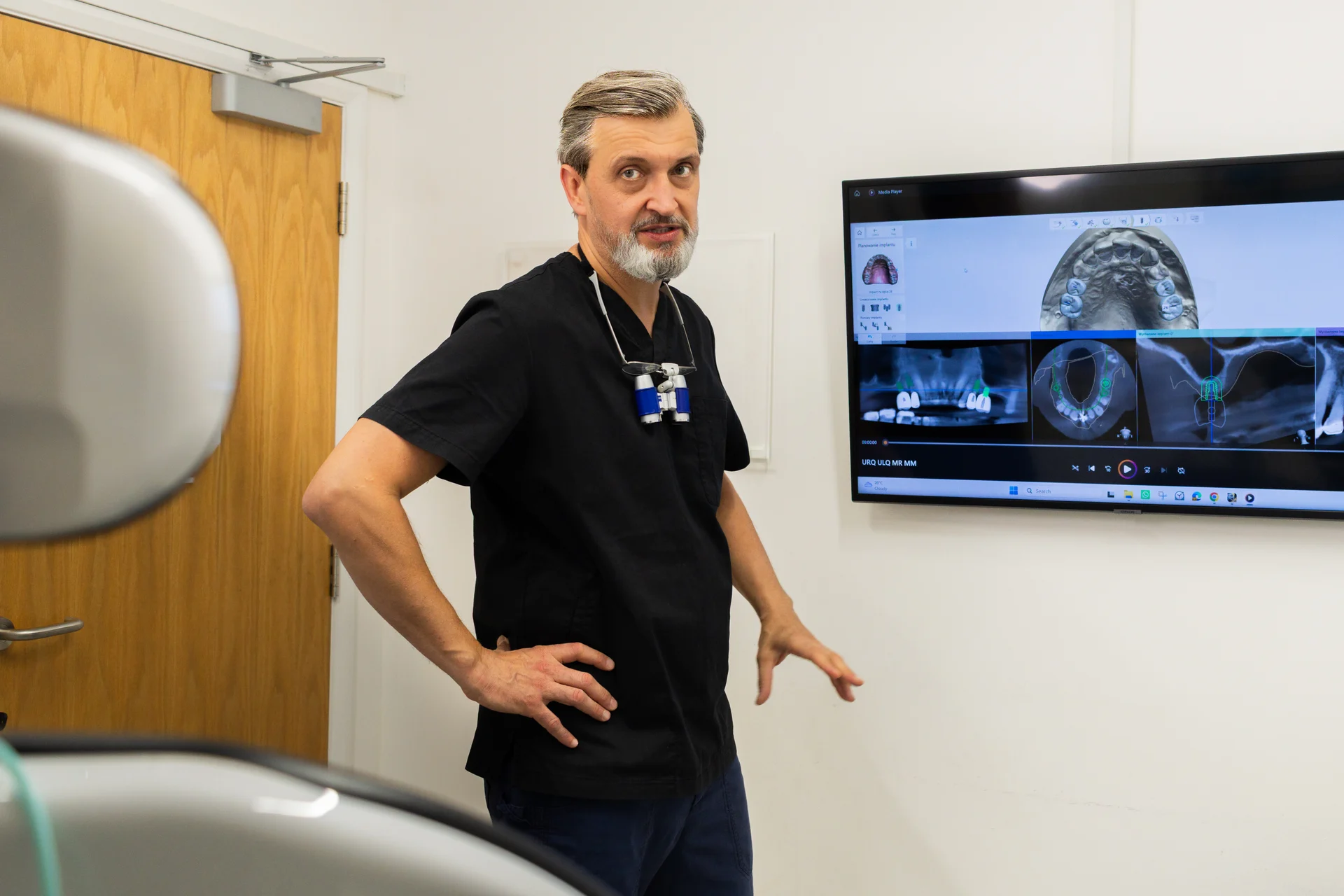
Your three-dimensional CT scan is essential to my planning and is combined with a digital model of your teeth. It shows the available bone and nearby anatomical structures needed to design your surgical guide.
The implant position, angle and depth are planned digitally around both the available bone and the ideal position of your future tooth.
The guide fits precisely over your teeth and physically guides my drills along the digitally planned path. This helps me position the implant in the best available place to support a natural-looking final tooth — both functionally and aesthetically.
Your individual surgical guide
Every surgical guide is individually designed from the patient’s three-dimensional records. It fits precisely over the teeth and guides the drill according to the digitally planned position, angle and depth — helping translate careful virtual planning into controlled clinical treatment.
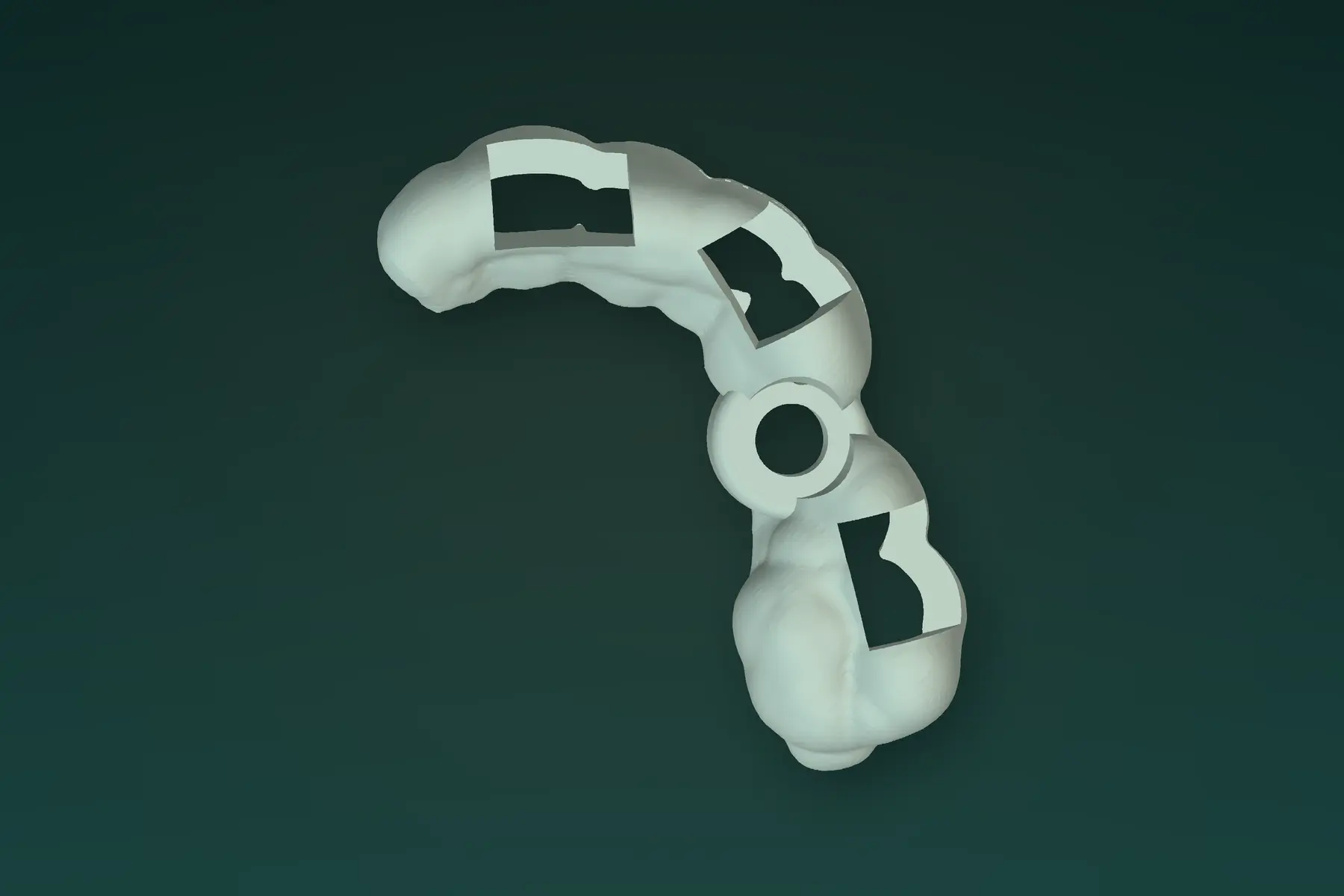 Patient-specific design
Where anatomy allows, I aim to align the implant closely with the planned crown, keeping the need for angular correction to a minimum. Small deviations are often clinically acceptable.
Careful alignment helps manage how biting forces are transferred to the implant components and surrounding bone. Digital planning and a personalised surgical guide help achieve the planned position.
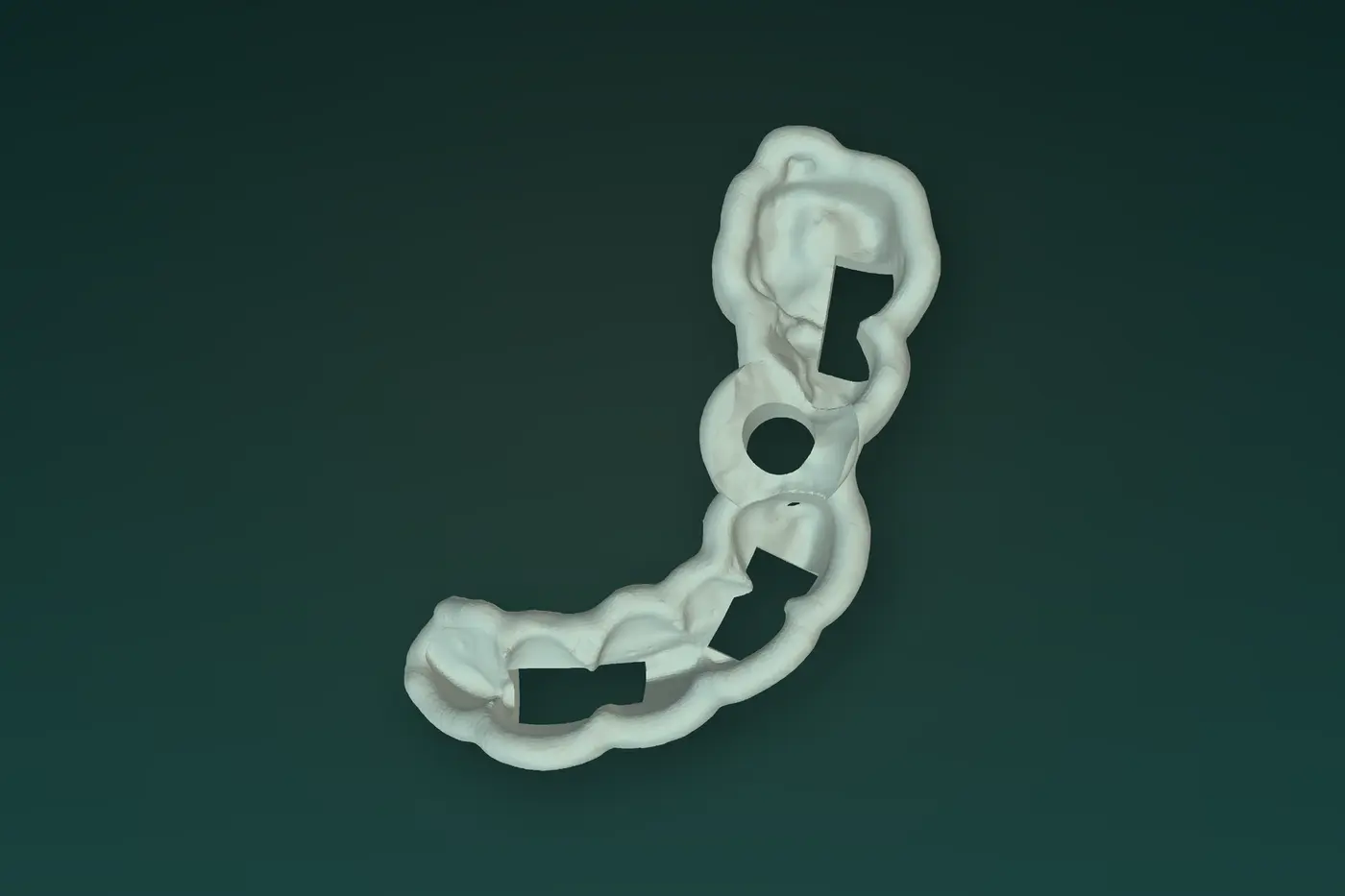
Designed to seat securely over the patient’s teeth.
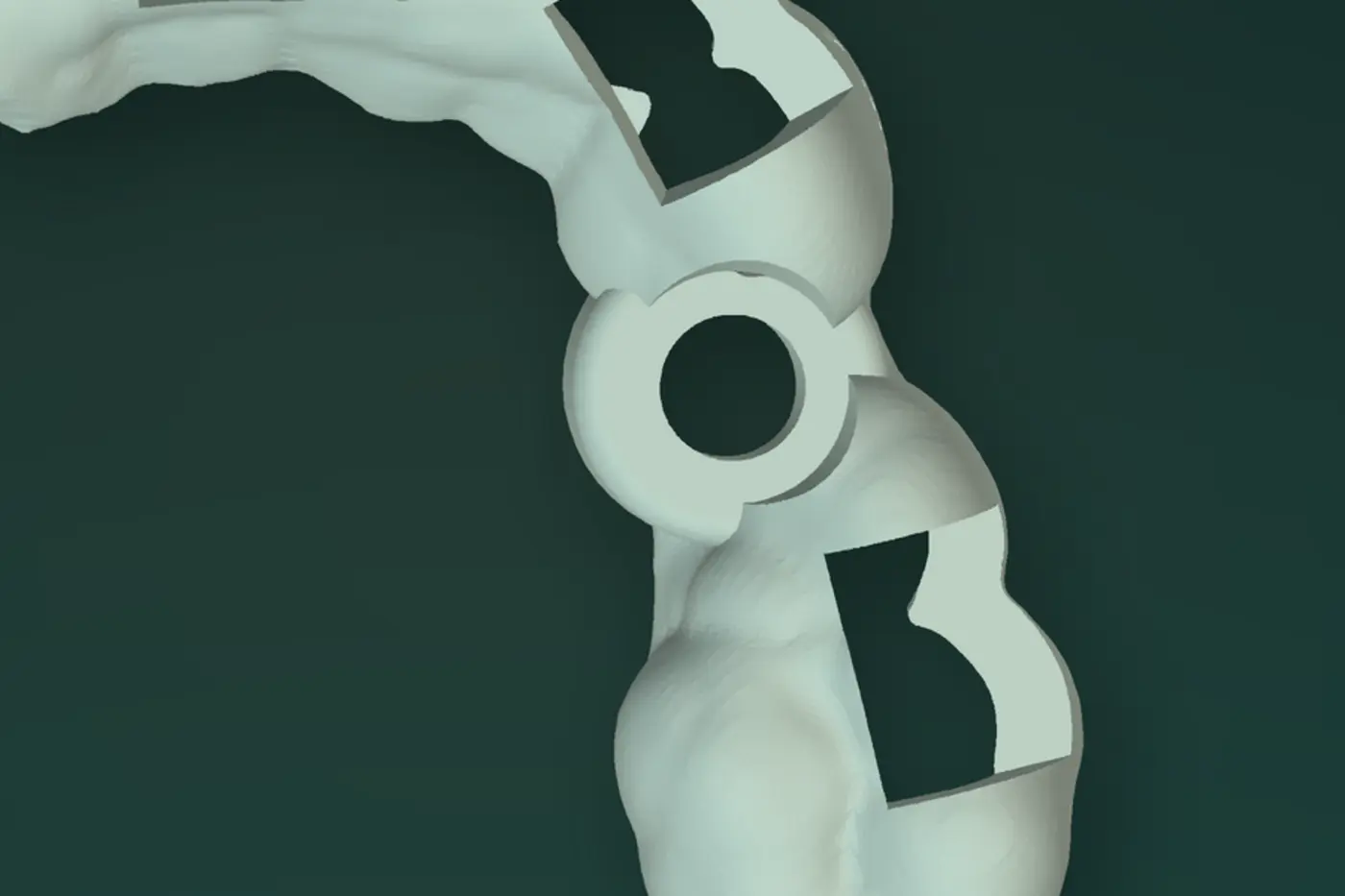
The guide sleeve transfers the planned angle and position to surgery.
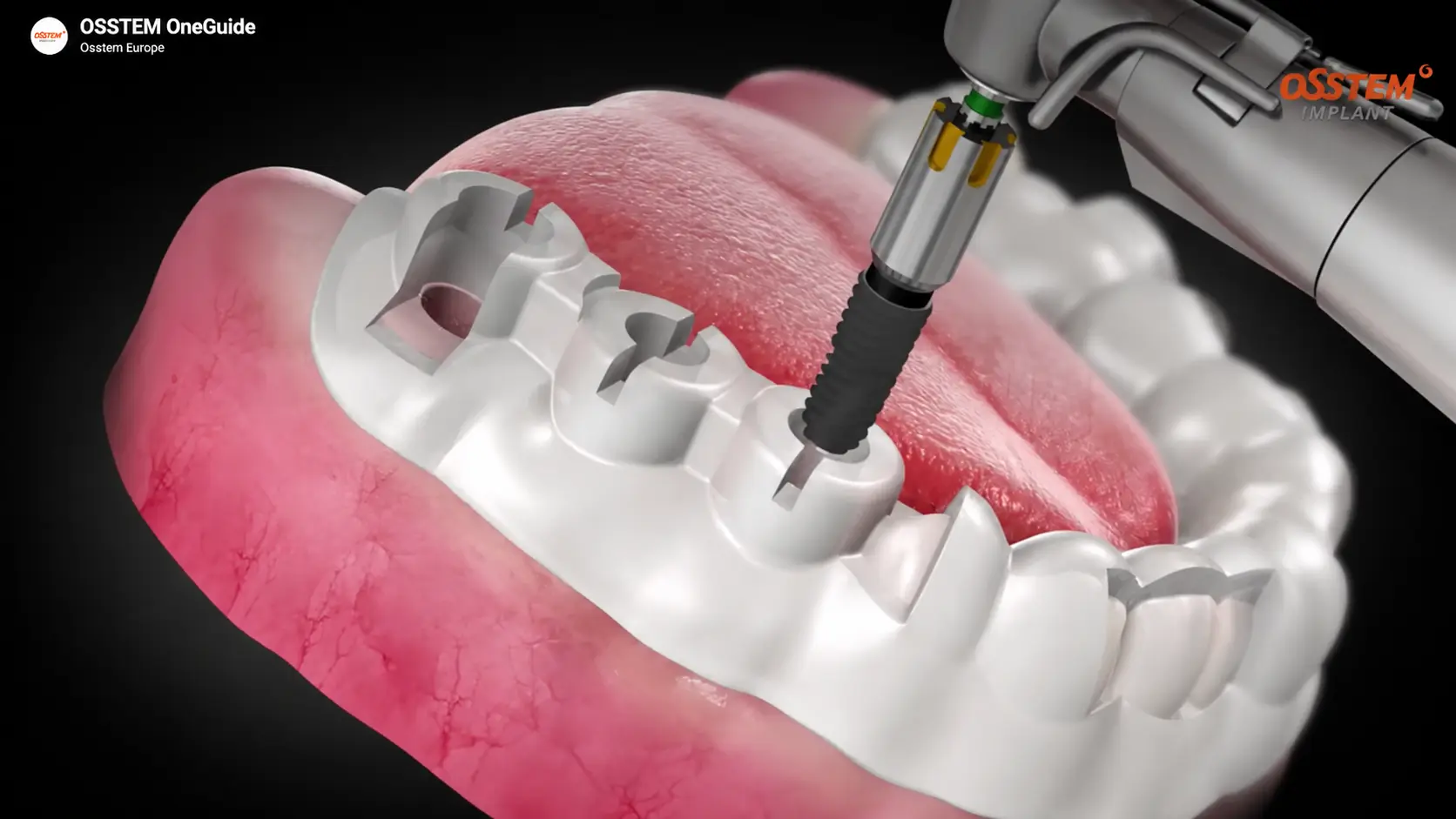
I use the Osstem OneGuide system to transfer the digitally planned implant position, angle and depth to the surgical procedure through a patient-specific guide.
Why I prefer guided surgery
Where clinically appropriate, guided surgery is my preferred approach because the implant position and the important anatomical structures can be considered in detail before the day of surgery. The guide then helps me reproduce that plan with greater control than a freehand approach, making the surgical stage more precise, streamlined and predictable.
The guide transfers the planned depth, angle and position to the mouth, helping me maintain the safety margins planned around nearby nerves, sinuses and other important structures.
Because key decisions and measurements are completed in advance, implant placement can often be more streamlined, helping to reduce time in the dental chair.
In suitable cases, guided placement may allow a flapless or smaller-access approach. Less tissue disturbance can mean less discomfort and swelling, with an easier recovery.
The implant is planned around how the final crown or bridge needs to look and function — not simply around where bone is available.
Guided surgery is my preference, not a rigid rule. Occasionally, direct surgical visibility, bone grafting, soft-tissue management, restricted mouth opening or the inability to seat a guide predictably may make a partially guided or freehand approach more appropriate. I choose the technique that offers the safest and most controlled treatment for each individual case.
Guided surgery supports accuracy and careful planning, but it does not remove every biological or surgical risk. Clinical judgement and appropriate safety margins remain essential.
Digital planning in practice
Three-dimensional records allow me to assess the available bone, identify nearby anatomical structures and plan the implant around the ideal position of the final tooth. The plan is then transferred to the mouth using an individual surgical guide.
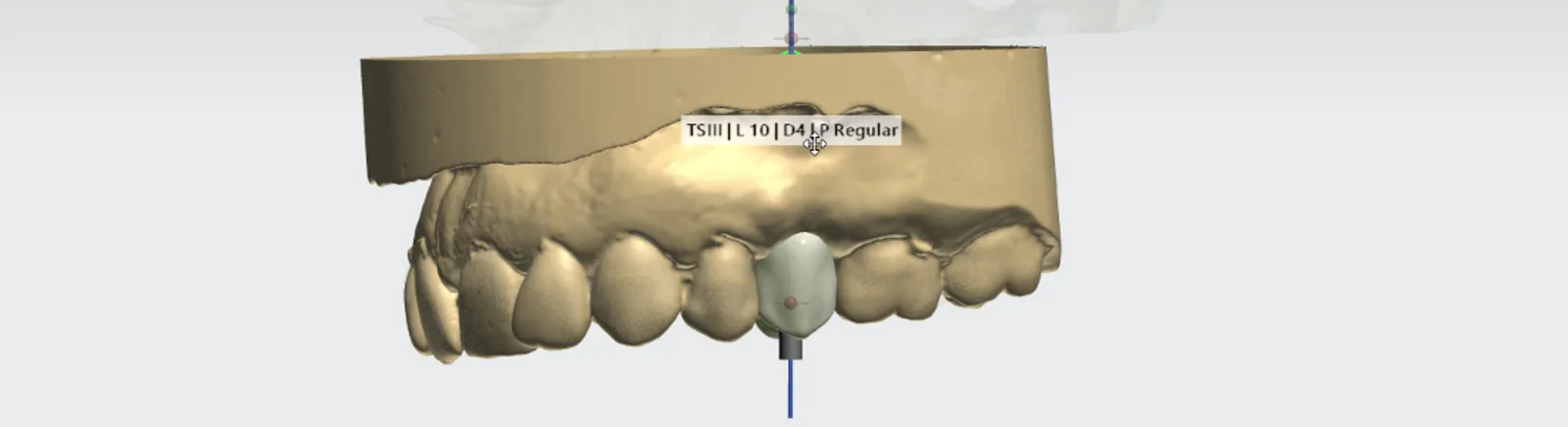
The future crown position helps determine where the implant should be placed.
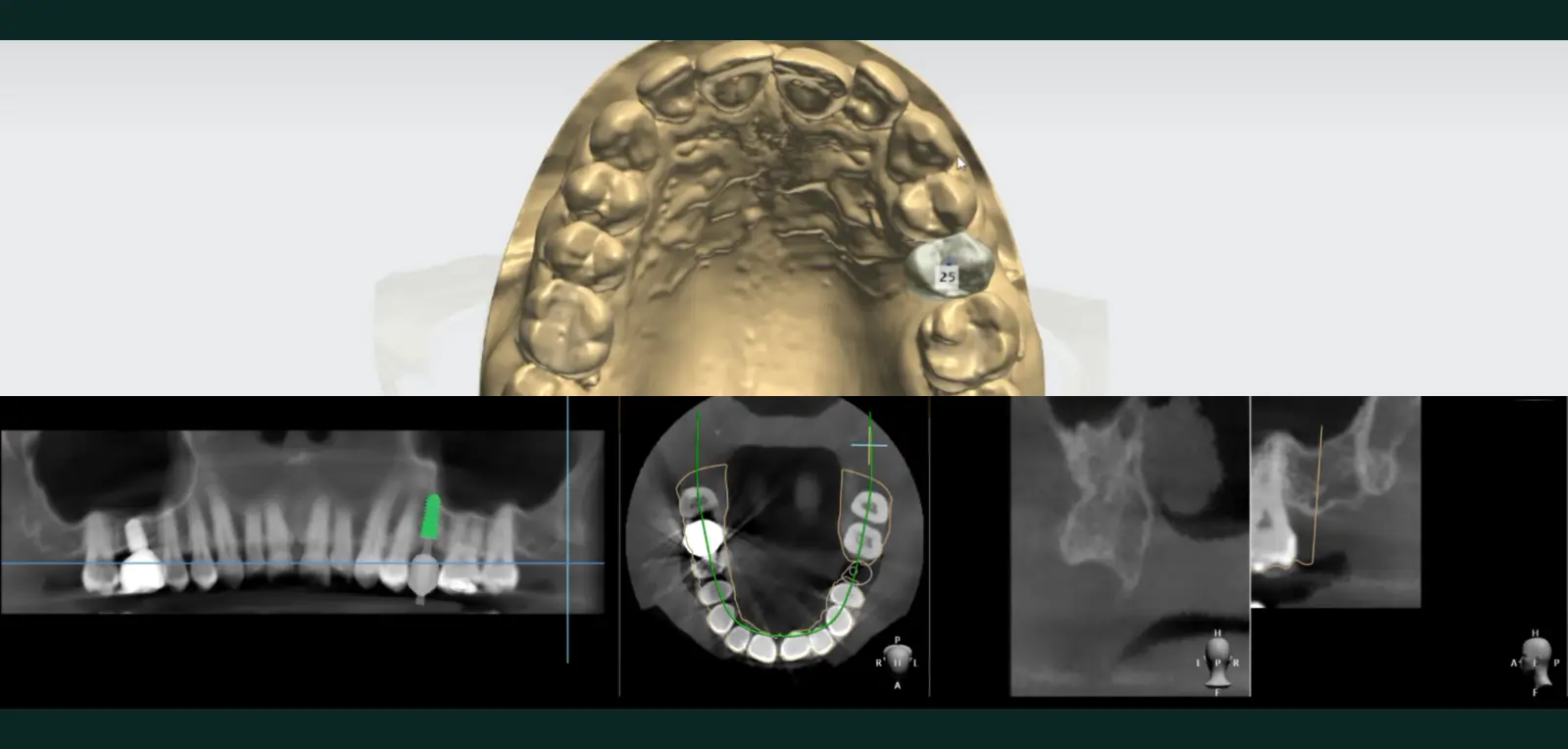
The CT scan is reviewed to assess the bone and important nearby structures.
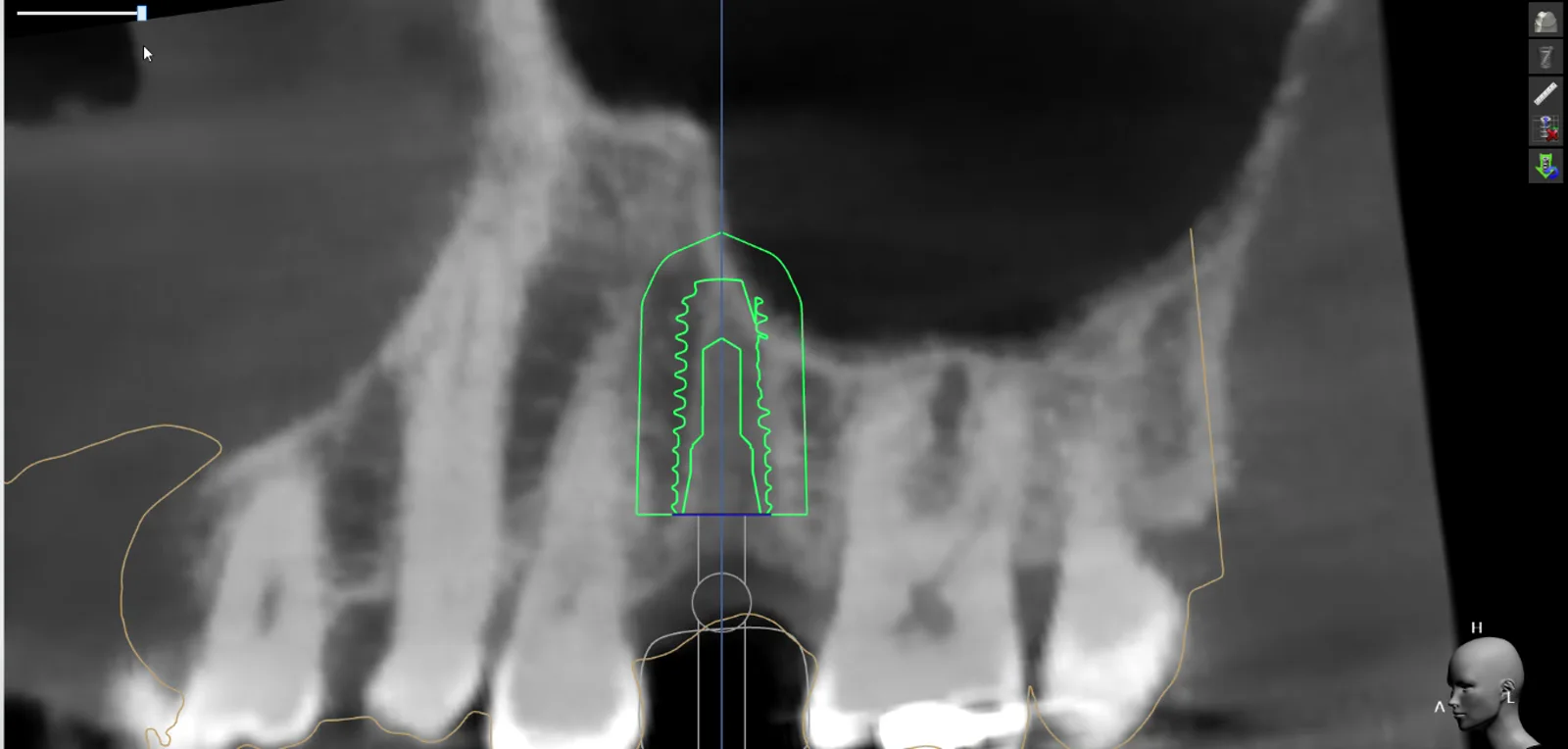
Angle, depth and position are checked carefully using dedicated implant-planning software before surgery.
Planning images are shown without patient-identifying information. The illustrated plan is an example; every case is assessed and designed individually.
Your treatment journey
Implant treatment can feel like a big decision. You will understand each stage, your alternatives, likely timescales and costs before you decide to proceed.
We begin with your concerns, your medical history and a careful clinical examination.
A three-dimensional CT scan is essential to my implant planning. It allows me to assess the bone and design the guided surgical approach.
At placement, the implant gains primary stability through mechanical engagement with the bone. It then normally heals for around three months while biological stability develops through osseointegration.
Final scans or impressions are taken and your bespoke implant crown, bridge or denture is fitted, commonly around three months after the implant has been placed.
Treatment timing
For an already healed site, implant placement, approximately three months of healing, final records and manufacture of the restoration usually make the complete process around four months.
Why do we usually wait? Initially, the implant is held securely by mechanical engagement with the surrounding bone — this is primary stability. During healing, new bone gradually forms against the implant surface, creating biological secondary stability through osseointegration. In most cases, I allow around three months for this process before beginning the definitive restorative stage.
If a failing tooth needs to be removed first, I may recommend approximately two months of early healing before placing the implant. The full process will then often take around five to six months.
Immediate implant placement at the same appointment as extraction is sometimes possible and can shorten treatment. It requires careful case selection and depends on the condition of the socket, available bone, infection status and whether good implant stability can be achieved.
These are typical estimates. Bone grafting, sinus procedures, healing response and laboratory stages can alter the overall timescale.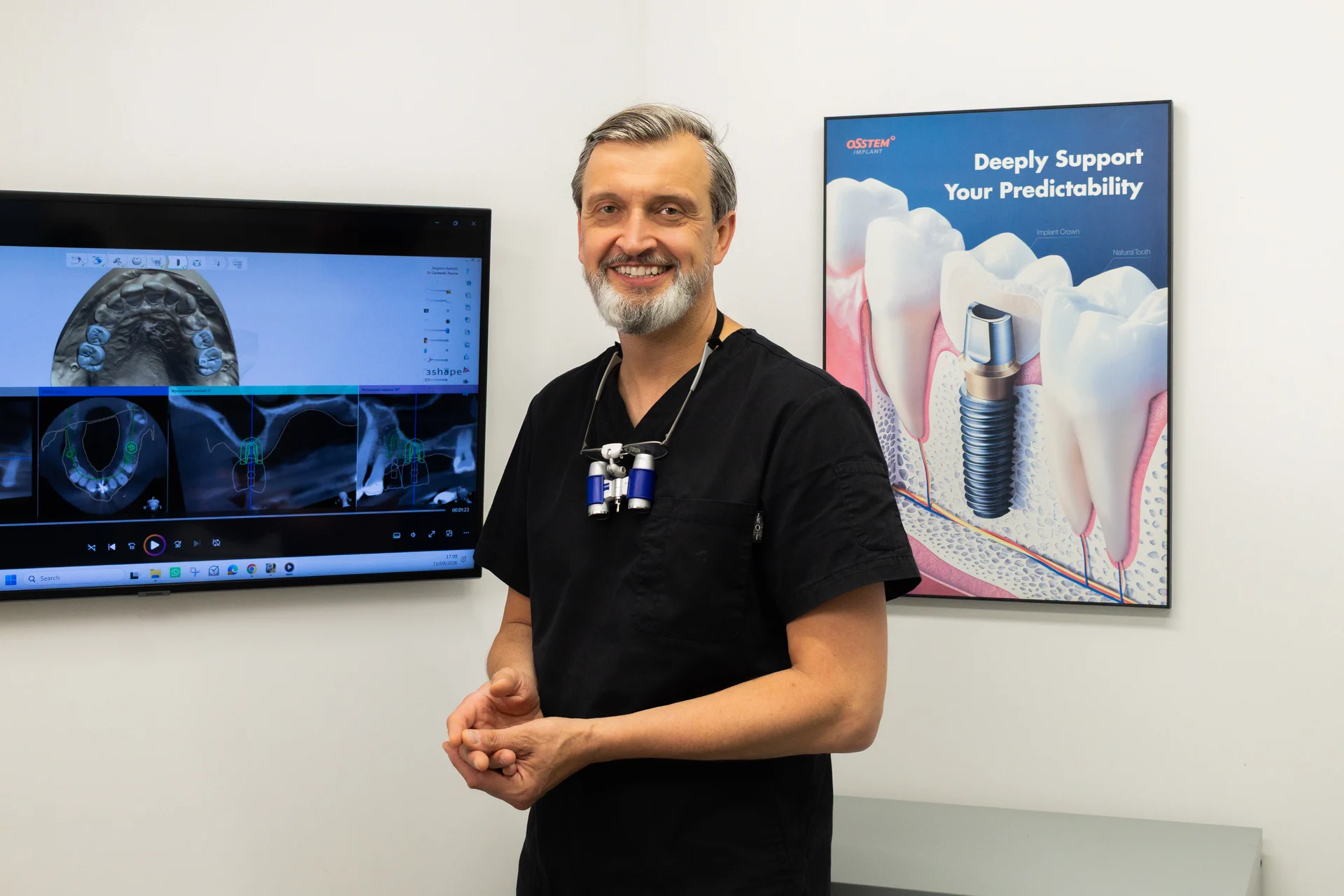
Meet your dentist
Dr Matthew Ciszewski is a long-serving dentist at Together Dental, providing implant, restorative, general and cosmetic care.
His approach combines careful surgical planning with an understanding of the final restoration — how your new tooth should look, feel and function. Patients are guided through their options in plain language, without pressure.
PGCert Implant Dentistry
Postgraduate training in implant surgery
PGDip Implant Dentistry, Cambridge
Advanced implant and restorative training
Comprehensive care
All restorative options carefully considered, with a focus on preserving natural teeth — informed by over 20 years of clinical experience.
Clarity at every stage
Patients regularly tell me how much they value the way I explain their treatment. I take time to make complex decisions understandable, answer questions honestly and put the complete plan in writing.
You receive a short written recap of what we discussed, the options available and the recommended next step.
Your detailed report explains the scan findings, proposed treatment, stages, timing, costs, alternatives and relevant risks before you make a decision.
Common questions
Your consultation is the best place for advice specific to you. These answers are a useful starting point.
Many adults with one or more missing teeth can be considered for implant treatment. Gum health, bone volume, medical history, medicines, smoking, oral hygiene and the way your teeth meet all need to be assessed first. Bone loss or gum problems do not always rule out treatment, but additional care such as gum therapy or bone grafting may be recommended before implant placement.
Following your consultation and personalised treatment plan, the team can explain the payment and any finance options that may be available. You will have the opportunity to understand the proposed stages and costs before deciding whether to proceed.
Yes. In my opinion, a three-dimensional CT scan is an essential part of accurate implant planning, particularly when I am planning fully guided surgery. It allows me to assess the bone and important nearby structures, plan the implant position, angle and depth, and create your individual surgical guide. The guide then directs my drills so that the implant is placed where it can best support the final tooth both functionally and aesthetically.
At an already healed site, the whole process is commonly around four months. When a tooth must be removed and the socket is allowed to heal for approximately two months first, the total is often five to six months. More complex grafting can take longer.
Bone preservation or grafting may be possible, depending on the site. The need, materials, benefits and alternatives will be discussed before treatment.
Implant aftercare
Implants are biological treatments, so no clinician can promise that an implant will last for a particular number of years. What I can promise is transparency and support if a problem occurs.
If an implant fails to integrate during the initial healing period — normally within the first 12 months or before completion of osseointegration — I will usually offer one replacement implant placement without an additional surgical fee, provided repeating treatment remains clinically appropriate.
The implant-supported crown, abutment and retaining screw have a limited five-year technical guarantee for qualifying technical or material complications. This is not an unconditional biological guarantee.
Cover is subject to the full written terms and normally excludes problems associated with peri-implantitis, inadequate oral hygiene, smoking, missed maintenance, uncontrolled medical conditions, trauma, excessive bite forces or bruxism.
Full terms are provided with your individual treatment report and consent documents. Any later biological complication is assessed individually.
General dentistry
Alongside implant and restorative treatment, I also provide routine check-ups, preventive care and ongoing general dentistry. You are welcome to get in touch whether you have an implant concern or simply need a dental examination.
Ask a questionStart a conversation
If you would like to ask about dental implants, general dentistry or another aspect of your care, leave your details and I or a member of my team will contact you.
PrivateYour contact details will be sent securely and will not be displayed publicly.
SimpleAsk a brief question without sharing confidential medical information.
FocusedChoose the subject that best matches your enquiry.
Take the first step
Choose the practice most convenient for you and contact the team to arrange an implant consultation with Dr Matthew Ciszewski.
84 Blenheim Road
Norwich, NR7 8AL
5 Augusta Street
Sheringham, NR26 8LA